Tuesday, February 21, 2012

Tumblr's Love Yourself Challenge!

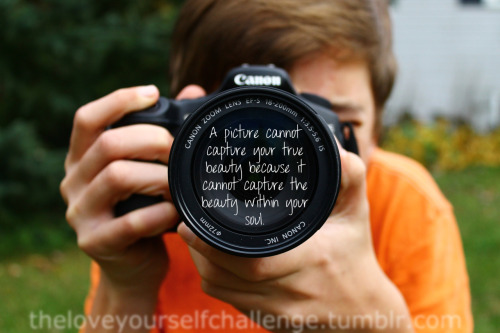
I love this image on tumblr--and there are many others that will inspire you, make you smile, and remind you that we're all in this together. Caring for and loving ourselves gives a beautiful gift to the world around us.


This week, go to their site and post a comment or one of your own images. Spread the word!
http://www.loveyourbodychallenge.tumblr/com

Tuesday, February 14, 2012

Your Body Is Your Valentine

If you haven't already, I highly recommend taking a look at Marianne Williamson's A Course In Weight Loss, which is a truly spiritual approach to finding your way into right relationship with your body and your weight, using many of the principles of A Course In Miracles. This quote in particular seems appropriate to share with you today:

"Love and love only, produces miracles...That includes your love of self, and your body is part of who you are. If you love your body when you're thin but hate it when you're not, then you love yourself conditionally, which is not love at all. If you can't love your body, you can't really love yourself."

Think about this just for a moment and let it sink in. If your body is an essential part of yourself, then no matter how much 'work' you've done to become enlightened, make peace with life or with others, if you still resist, fear or hate your body then you can't yet say you love yourself. Your body needs that love and peace too.

Is there anything stopping you now from choosing love? Do you set conditions for your body which, when you meet them, will allow you to love it? What if the whole point is to choose love for its own sake, so that your life can be lived freely, miraculously and without the pain of judgment?

This doesn't mean that things won't change. Only that change will come from love, from wanting to forgive yourself and your body and work together, rather than being at odds with each other. So many times we think we can create change out of force, fear or judgment. But mostly we find ourselves right back where we started from. It won't mean much to you to lose weight if it comes from fear and if you know you haven't found that place of love within. Your body will rebel against that and so will you.

What loving act could connect you to your body today and how could you begin a relationship of love instead? How could you let your body know you want to begin to work together rather than outside of it, judging you both? Take that step today. Make your body your Valentine. Here are some possible ways you might declare the change:

1) Go for a walk.
2) Get a massage.
3) Write a love poem to your body for all it does for you.
4) Put on some music and dance.
5) Light candles and make some time to meditate on the body, checking in on all you feel.
6) Take a hot bath or shower.
7) Put some delicious-smelling lotion on, slowly and deliberately, letting your body know you're consciously experiencing the sensations.
8) Choose to slow down over your food and listen to what your body needs, how it feels.

Stepping into love is an act of courage that is demonstrated every day. And yet, at a certain point, it really is the only choice we have if we want to give up our bitterness and stuckness and live a different kind of life. As we do this with our bodies, we begin to do it with our whole lives. Your body has a Valentine's gift for you too; all you need to do is to connect, listen, and open yourself to its world of sensations and presence, calling you into the moment in which it lives.

Tuesday, February 7, 2012

A Prayer to Honor the Body


I've been thinking lately about that prayer of St. Francis, how it encourages us to address the needs that are before us by providing what is needed to the world. I wonder how much we do that with our bodies, which we so often ignore in the face of our to-do-lists. Sometimes we need a reminder of the path we truly wish to tread.

This poem is written to honor the body, and remind us of the simple things it requires from us, and is oh-so grateful to receive...

Prayer On Behalf of the Body
Body, make me a kind caretaker of your wisdom.
When you are tired, let me give you rest.
When you are hungry, let me feed you what you truly need.
When you feel sadness, let me comfort your soul.

When sickness comes, let me listen to what you are telling me.
When you are well, let me celebrate the gifts you give.

Where there is breath, let me breathe it;
Where there is energy and light, allow me to let it in.
Where there is bliss, fill me to my fingertips and toes.

Great Teacher and Vessel,
Allow me to give you what I also know I need:
Not so much perfection as an open heart to all that is.
Not so much judgment as compassion for who you are and what you do,
Not so much hatred as love,
Not so much resentment as respect for all you have to show me.

For it is in giving you what I need that I learn how to give it to myself;
And in giving it to myself
I can truly begin to experience my place in this world.

Amen.

Tuesday, January 31, 2012

Curiosity Did Not Kill The Cat

(Image taken from wallpapersup.net)

Do we experience our symptoms as something that happens to us, blind-siding and shocking us? Or as a form of communication from our bodies? What does weight gain want to tell you? Chronic pain? What’s the learning you get pulled into as a result?

If we look at our bodies as allies rather than enemies, they are always acting in our highest good. A bodymind scientist named Candace Pert even goes to say that “our bodies are our subconscious minds” speaking to us. This is often misconstrued as blaming or finger-pointing, a la you created your own cancer, you wanted this illness on some level, etc. I think we have to be careful with how we let ourselves interpret the understanding of our bodies as communicators.

From a place of connection to our bodies, as with anything in life, we can look at what there is to learn and understand, not just be victims to circumstance. That’s the shift that wants to happen when we talk about our bodies and their symptoms having a ‘use’ to us. Through them—as with any life experience we embrace meaningfully—we learn and grow, rather than just resisting and getting stuck.

Look at whatever is happening with your body right now and ask yourself the simple question of whether or not you have embraced it and become curious about it, or resented and resisted it. At a certain level it’s just a matter of energy: one point of view opens us and gives us meaning and the other shuts us down.

When symptoms feel like they have the better of us, it’s good to be curious about them and see what’s there. We’re not getting out of it anyway—we may as well embrace it. What does it really feel like to be carrying this extra weight around? How might it be telling you about other ways in which you are dragging, resisting, avoiding life? What is it like to awake in the middle of the night with chronic pain? Like a child, what does it want from you and how does it teach you deep compassion with yourself and your experience?

Anything in life can be a teacher or something we resist. Finding the way to let in the relationship to our bodies rather than feeling like symptoms ‘happen’ to us gives us a way of being curious and making meaning. How can you compassionately listen to your body’s symptoms today? What might they share with you about your life and the lessons your soul has to live?

Tuesday, January 24, 2012

Breaking the Cycle: Unconscious Behaviors & the Body

(Image taken from naturallyintense.net)

Do you ever find yourself doing things you don't really want to be doing, especially when it comes to food, exercise or self-care?
Do you 'suddenly' find yourself in front of the tv with a bag of chips at 1am? Or sleeping past that alarm that was supposed to get you up for the workout you keep saying you're going to commit to? Or eating that dessert you didn't really want because someone put it in front of you at an elegant meal out?

Our relationship with our body is full of all kinds of unconscious moments, moments that reveal to us that we're not always in control of our behavior and our choices. Once we slip into those moments, it's hard to get out. When we do realize we've 'done it again,' we're more than likely to wallow in guilt or shame, tell ourselves 'I'll never do this again,' and then repeat the same cycle a few days or weeks later.

What makes it hard to live our intentions out into the world and into our choices with our bodies? What takes over instead and makes us do things we don't mean to be doing--and what can we do it about it? (No pun intended.) I have a few thoughts I'd love to share.

1) Don't give in to shame.
One of the easiest things to do when you realize you've repeated a behavior you really didn't want to, is to slip into an icky feeling of shame. Your thoughts about yourself may be bad: "I can't believe I did this again," or "I'm never going to change." When we look at our body as something we're in relationship with, there's a different kind of accountability and a desire to stay connected. You might feel bad about what's happening, but how can you speak to yourself (and your body) differently about it, with more compassion and honesty: "I'm so sorry. I know I did this again. I'm not sure what to do. I'd like to show you I love you more than I do. How can we do this together?"

2) Learn to feel what's happening in your body and what's really going on.
One way out of the cycle of our behaviors is to begin to catalog what gets us there in the first place and to begin to commit to feeling it. If you slow everything down, you'll realize there are ways that you actually feel in your body as the unconscious behavior is happening that give you information. As you reach for the cupboard for something you don't really want, what are you feeling in your body? What's going on inside? What does it feel like in your body when you eat for emotional reasons rather than out of hunger? Does it feel like more of a choked up feeling? Foggy? Can you check in with your body to ask if you're actually feeling hunger first? As you become aware of the differences and take the time to listen, your body may have a lot to say about what you really need.

3)What are the reasons for the behavior?
When we act out unconsciously, there's usually something else that's being communicated. See it as a kind of inner temper tantrum. What was really trying to be said by the overeating, oversleeping? Do you need a break? Are there feelings you need to express to someone about something? What steps can you take to take care of what you're really feeling and needing? This is why staying connected to the body even through unwanted behaviors becomes so important. It wants to feel listened to and loved, not abandoned, rejected or criticized in that moment.

4) Practice giving yourself what you really need.
...And then you can give yourself what you really need. If you finally begin to listen and your body is telling you you're upset about something because you feel heavy in your heart and a little panicky, then you might want to call a friend and talk or go for a long walk or write it all out. If you need to express a feeling or have a difficult decision to make, see if you can get support for doing that and take the plunge. And if feelings are too big or overwhelming, get some help for sorting them out so you can feel more conscious and present in your life. Your unconscious urges are usually replacements for getting to the real issue at hand--kind of like when you procrastinate by cleaning out your sock drawer instead of getting to that difficult email for work.

Overall, it's so important to have compassion for unconscious behaviors and begin to understand the message behind them. They're not there to make you feel ashamed of yourself; they're there because they are trying to communicate something that needs to be heard. If you can slow down, have compassion and stay connected to your body, you have the chance to figure out what that actually is and begin to address it.

Embrace the behaviors as the beginning of a message you can start to listen to; then let the information in. It's been waiting for you all along; it just had no other way of speaking. Being in a kind and loving relationship with your body, one where you can partner with what you (and it) are feeling rather than ignoring it, leads you to the possibility of real change and healing.

Tuesday, January 17, 2012

Returning After A Long Absence

(Image taken from organicsoul.com)

What do we do to begin a relationship with our body when we don't remember ever having one?
I was talking with a client about this tonight as we scanned his past for any memories of when things felt really good in his body. Through struggles with weight and illness, he couldn't think of even one moment. In fact, he could recognize that much of his life and even childhood, his head had been filled with obsessive thoughts about food, his weight and how he was being perceived by others.

Sometimes are best moments in our bodies are ones we can't even remember, before the judgment and self-consciousness set in. One client recounts tearing around in the fields behind her childhood home, climbing trees and pretending she was enacting a live tv show about a kid living on her own in the wild. She fiercely loved her body and all it did for her. But for many of us, even our earliest memories may be tainted with the comments of others, including peers and parents, or a sense that we were the wrong size, shape, weight.

How do we find our way back to our bodies when we can't even remember what it felt like to feel good in them?

We start right now to find our way back in.

If we accept that we are all in a relationship with our bodies all the time, then even this unconscious, blocked out place we've come to with our bodies is a relationship of sorts. It's just not a very good one. It needs more of your consciousness and attention. It's grown some cobwebs.

We find our way back in by doing just that: stepping in. One of the first exercises I give to clients in my Love Your Body work is to spend 5 minutes 2-3 times a week simply committing to sitting, closing their eyes, and feeling all the sensations in their bodies.

In order for a relationship to begin, we have to take a first step and just show up. That's all. What does it feel like when you step into your body? What feelings are there? Aches or pains?

When your mind begins to wander in this exercise (and it probably will), commit to returning to the body like you would a good friend after the conversation has turned back to you. Keep inquiring, stay curious: what is my body feeling right now? How is it communicating? What's it like to be here together?

Somewhere in the process, simply say to your body, 'I'm here,' and see if you notice a response. Your body may have been waiting a very long time to feel that sense of presence from you, to even feel you care.

Because where else do we begin when we've been absent from someone or something for a long time? We have no other choice but to start exactly where we are, and to begin to establish trust by being present. We have to be patient for this process and know that it won't happen overnight. But slowly over time we begin to trust again: the self and the body, finding their way toward each other.

Spend a few minutes atleast twice this week stepping into your body, an open observer and a committed and returning friend. What do you notice? Does your body begin to bend back toward you, like a long lost partner? Can you feel the difference in its responsiveness when you show up with an open, caring and listening heart to the world it has held for you, all this time?

We can't move into the next steps in a body relationship--listening, trusting, forgiving--until we've started with this very simple one. To reconnect, we have to begin by returning, consistently, and without protest or excuses, to inhabiting our own skin, to get curious about what's there and build trust by staying--or coming back as often as we remember. I believe our bodies are just waiting for us to do so.


Tuesday, January 10, 2012

The Lullaby of Sleep

(Image taken from indianhindunames.com)

Sleep seems to be a huge issue for clients these days. How much sleep are you getting and how good is it? For some it's an issue of time: "I just don't have time to get more than 5 or 6 hours a night...." For others it's an issue of quality: "Between my kids and my husband snoring, I'm lucky if I get more than a couple of hours of uninterrupted sleep..." And of course sometimes it's just the stress of our own minds that keeps us awake, churning and reworking the day or things to come, even as our body wishes for sleep and rest.

A few themes emerge. First, is the importance of how you interpret the lack of sleep. Does it make you crazy, anxious, worried to not be getting sleep? Often this can become a vicious cycle, so that the worry about not getting sleep or falling asleep becomes a problem in and of itself. See if your language and thinking about not sleeping can become gentler and more kind, less stressed: "It is what it is, I'll get however much sleep I get..." That softness and lessening of anxiety around the problem itself can make a huge difference. (I once heard that just resting is worth a larger percentage of sleep time than we think and that also put my mind at ease. Even if I'm not actually asleep, I realized, just lying here is still allowing my body to rejuvenate.)

Then consider if you're being too rigid about how or when sleep needs to happen. If you're not getting enough sleep consistently at night (especially if it's due to circumstances you can't control), can you let yourself rest briefly at other times during the day? Can you step outside of the box and shut your eyes in your car for twenty minutes on a break from work? Take a brief nap while the kids are at school? Listening to the body means getting out of our concepts of when sleep should happen and into the moment of what our bodies want and need right now.

I also think the transition to sleep and into the lull of our bodies takes some ritual, a ritual we may have known has children but have mostly lost touch with as adults. So often we're in bed with the television on or our computers, finishing an email or surfing the internet, then expect that we'll close our eyes and drift off to sleep. Instead, consider that our bodies and our minds may need what we once needed as children: a place of lullaby, story or mystery. Can you light candles and play soft music for a few minutes before you go to bed? Read a favorite book instead of television or the computer?

My husband frequently gets irritated if I try to have too serious a conversation before bed. This used to annoy me (and sometimes it still does) but I also appreciate the wisdom of it. He's protective of his 'sleeping space.' He knows that if he gets too involved in a conversation right before bed about something important, he'll be replaying it and considering it as he's trying to transition to sleep. Instead, he prefers to read or watch something, to get into the story part of his mind and not the problem-solving one. Good for him. How many times do we do the opposite, keeping ourselves awake with analysis of the day or the future, simply because we don't know how to shut it all off?

A sleep expert I heard speak about insomnia recently was very insistent on our need for transitional space, a time before bed when the lights get to be lower, when our minds get to slow down. Our bodies too need to take cues from us that they no longer need to be operating at full speed, reflexes at the ready. To surrender to the vulnerability of sleep is a metaphor for so much of the surrender we can forget how to do in our lives. We are still human beings in need of whatever that mystery of darkness is; we are still mortal, no matter how much we thrive on efficiency and productivity in our waking life.

Practice setting time aside for stillness before bed, and for valuing the quiet place you've created as much as the sleep itself. Notice how your body feels in the gentleness of it, and how much it craves it. Our bodies so often need to know they're safe and cared for; and we can't tell them with our minds but rather with our actions and our choices. This is one way the mind and the body can be reminded, like children, of the sacredness of sleep, and the way we can greet it and open to it like humble devotees, allowing it to take us to its depths.